Discover the rich UNESCO Heritage in Croatia with our latest blog post! Since 1979, when the first Croatian cultural assets were inscribed on the UNESCO list, Croatia has registered a total of 31 cultural properties up to the present day.
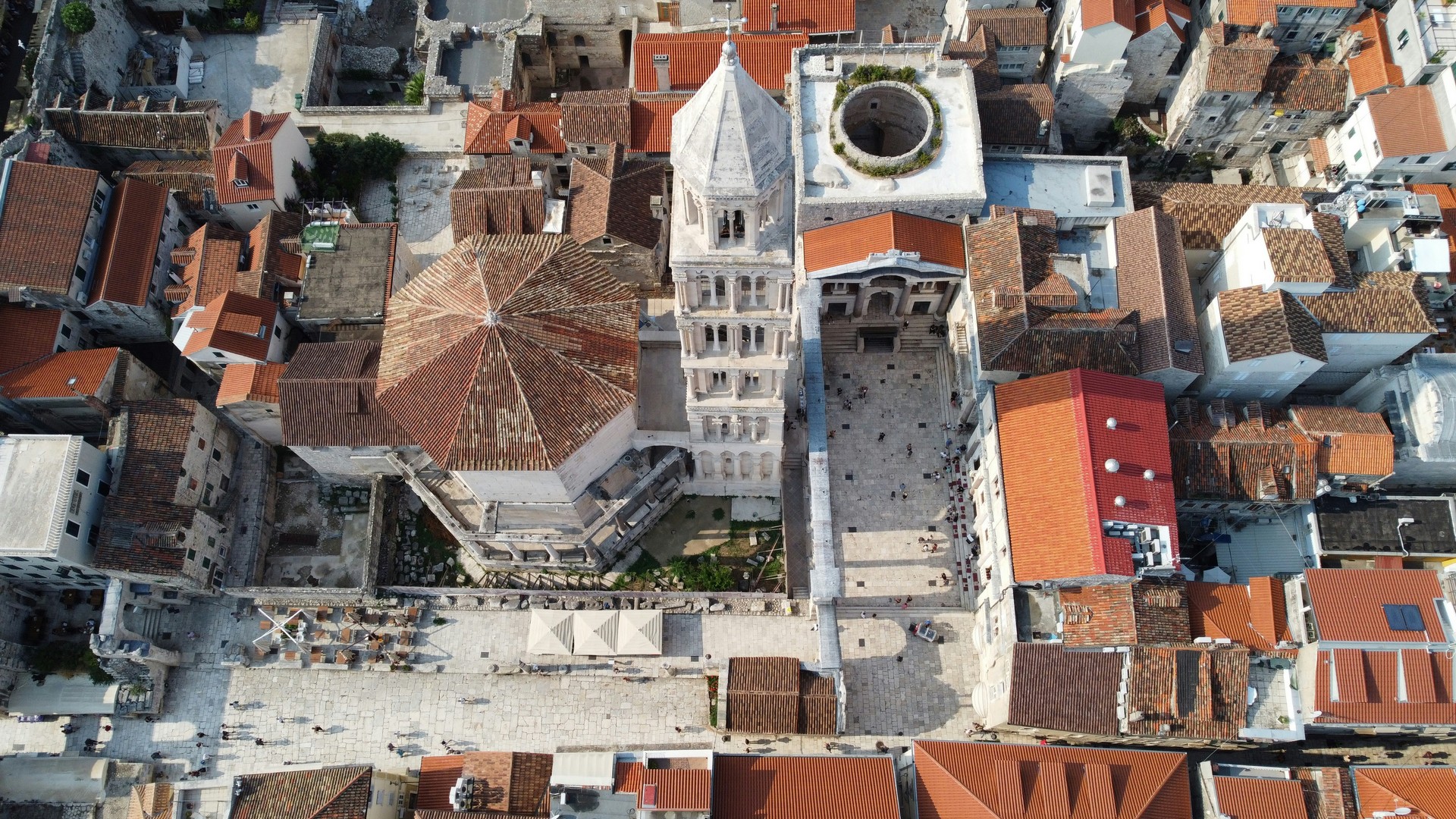
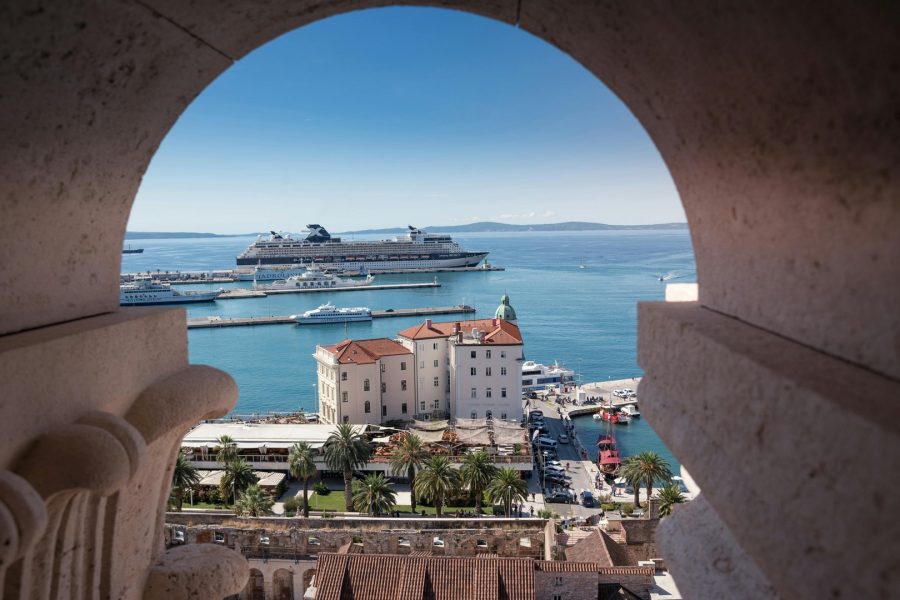
1. Historical Complex of Split with the Palace of Diocletian
The uniqueness of this historic city is evident in the fusion and presence of parts of the magnificent late antique structure, as well as its continuous adaptation and modification, and, in the mature Middle Ages, enrichment with new constructions in the Romanesque, Gothic, and Renaissance styles.
The Roman Emperor Diocletian built, at the beginning of the 4th century, near his birthplace of Salona, in the area of the then settlement of Aspalathos, a massive palace as a combination of characteristic late antique forms – a sumptuous and richly decorated villa and a military camp fortified with towers and walls. When Salona was destroyed at the beginning of the 7th century, the surviving inhabitants sought refuge in the palace, which, due to new and increasing needs, evolved into a city. The Palace of Emperor Diocletian, in terms of the preservation of the ensemble and individual original parts, is one of the most significant works of late antique architecture.
Book our Split Walking Tour: History,Legends & Tales and find out more!
2. Old City of Dubrovnik
The entire city of Dubrovnik represents a historic monument with significant examples of fortification architecture (city walls with forts, towers, and bastions from the 12th to the 17th century), Gothic-Renaissance churches, monasteries, palaces, and fountains.
The city developed from a settlement on a cliff where refugees from nearby Epidaurum arrived in the early 7th century, and it reached its final spatial expansion, defined by a strong defensive system, by the end of the 13th century. Over the following centuries (until 1814), thanks to its developed maritime industry, trade, and skilled diplomacy, Dubrovnik managed to maintain its independence and political freedom, becoming one of the maritime powers in the Mediterranean. Besides its acquired material wealth, Dubrovnik achieved outstanding spiritual values in all spheres of life, science, and art.
Explore Dubrovnik with our Private Guided Tour!
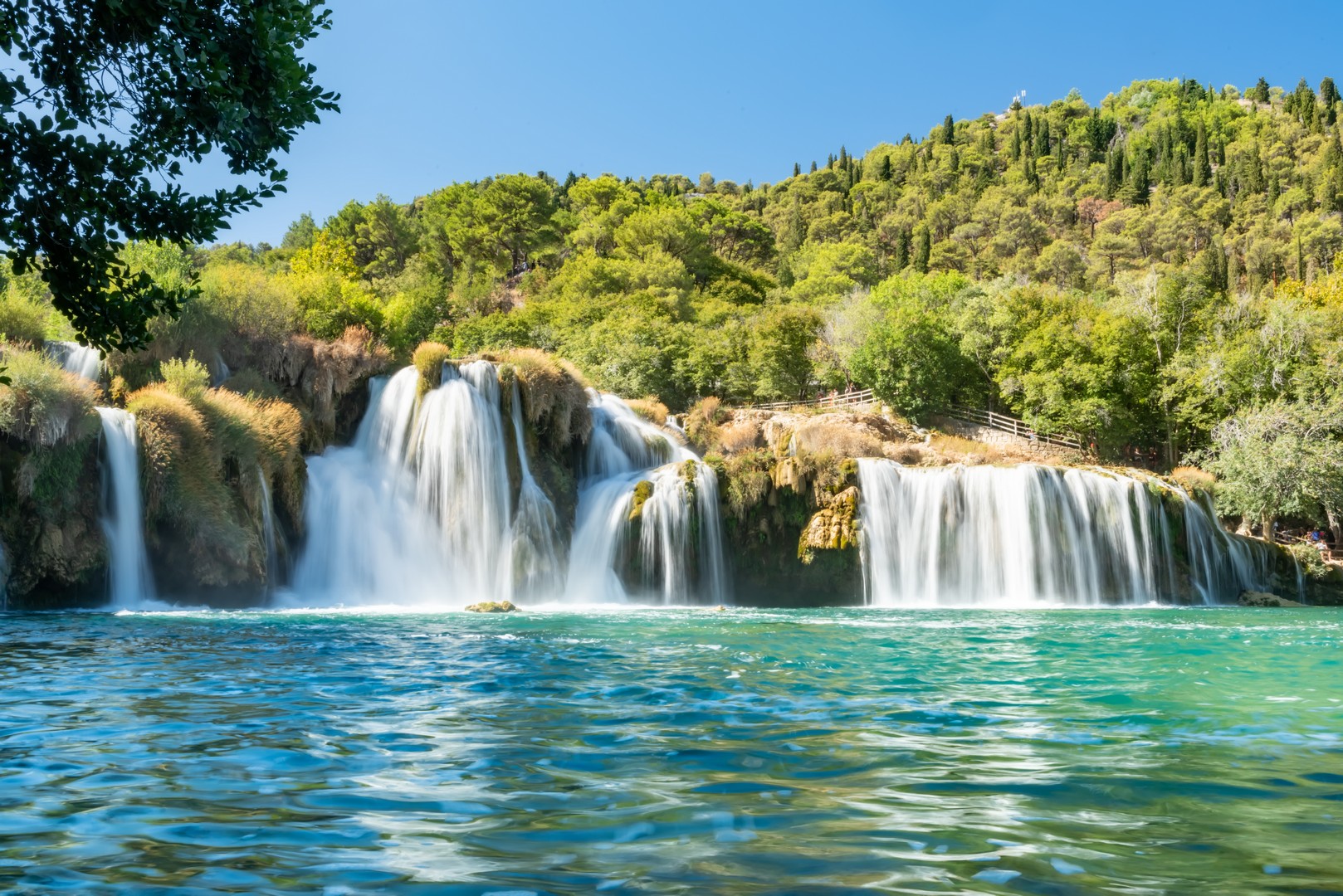
3. Plitvice Lakes National Park
This park owes its beauty and unparalleled attractiveness to a geological process occurring in the karst landscape, where the deposition of travertine over millennia creates natural barriers, forming 16 terraced, larger and several smaller interconnected lakes, linked by waterfalls, with the Great Waterfall standing at 78 meters, the highest in Croatia.
In the ongoing process of barrier formation, travertine-forming plants, algae, and mosses play a significant role, making it an extremely sensitive biodynamic system. The park’s specificity also lies in the travertine caves formed within the travertine barriers. Decorated with travertine formations, as well as stalactites and stalagmites of various colors originating from mosses and algae, often hidden beneath waterfalls, the richness and diversity of flora and fauna within the relatively small area of the park represent a unique phenomenon.
Discover the captivating beauty of Plitvice Lakes National Park on our exclusive private tour!
4. Episcopal Complex of the Euphrasian Basilica in the Historic Centre of Poreč
The episcopal complex in the center of Poreč, erected by Bishop Euphrasius in the mid-6th century, is the most well-preserved complex showcasing the fusion of early Christian and Byzantine elements.
Construction of the Poreč Cathedral complex began in the early decades of the 4th century, evolving through the 5th, and culminated with the construction of the basilica in the 6th century when Bishop Euphrasius extensively renovated the cathedral and the episcopal residence. The architectural peculiarities resulting from the fusion of early Christian and Byzantine art, the degree of preservation of the complex, and particularly the unmatched mosaics from all phases, with masterpieces in the main apse of the basilica, achieve artistic unity of the highest level. The main structure comprises a three-nave basilica with a spacious courtyard (atrium), on the west side of which stands an octagonal baptistery.
5. Historic City of Trogir
The medieval town of Trogir is an outstanding example of settlement continuity over 4000 years and, as such, one of the oldest cities in the Mediterranean. It was established as a Greek colony, and today’s densely built Romanesque urban fabric preserves its Hellenistic and later Roman matrix.
In the 13th and 14th centuries, west of the oval ring of the Romanesque town, the Borgo-Varoš was added, and in the mid-15th century, the construction of the large Kamerlengo Castle was completed at the southwest corner. The pinnacle of urban development is evident in the private, residential, public, and religious buildings of the early and mature Middle Ages, several dozen of which are preserved patrician houses and complexes often marked by architectural sculpture of high carving skill.
Particularly noteworthy is the Cathedral of St. Lawrence, with its exceptional Romanesque sculptural cycle of the main portal by the master Radovan – the most monumental work of the Romanesque-Gothic style in Croatia.
6. The Cathedral of St James in Šibenik
This unique building, which combined Gothic and Renaissance characteristics, was designed by Juraj Dalmatinac and completed by Nikola Firentinac at the beginning of the 16th century.
The stone cathedral is particularly notable for its vault and dome with innovative technical solutions, using interlocking stone slabs. The organic fusion of architecture and sculpture is most evident in the frieze on the apse, featuring a series of 74 intricately carved heads with highly portrait-like characteristics, placing it among the most significant architectural achievements of that time.
7. Stari Grad Plain
Stari Grad Plain on the Adriatic island of Hvar is a cultural landscape that has remained practically intact since it was first colonized by Ionian Greeks from Paros in the 4th century BC. The original agricultural activity of this fertile plain, mainly centring on grapes and olives, has been maintained since Greek times to the present. The site is also a natural reserve. The landscape features ancient stone walls and trims, or small stone shelters, and bears testimony to the ancient geometrical system of land division used by the ancient Greeks, the chora which has remained virtually intact over 24 centuries.
8. Stećci Medieval Tombstone Graveyards
Stećci are medieval monolithic stone monuments. They first appeared in the second half of the 12th century, with their initial phase spanning the 13th century. They were extensively carved and decorated during the 14th and 15th centuries. The production of stećci gradually declined in the 16th century.
They are found across almost the entire territory of present-day Bosnia and Herzegovina, in southern parts of Croatia, northwestern parts of Montenegro, and western parts of Serbia. Of approximately 70,000 documented stećci found at around 3,300 sites, Bosnia and Herzegovina has about 60,000, Croatia about 4,400, Montenegro about 3,500, and Serbia about 4,100 stećci.
In the territory of the Republic of Croatia, stećci are mostly found in the hinterland of the Dalmatian coast (and sometimes even along the coast itself), from Konavle to northern Dalmatia, and in the southern and central parts of Lika. They are particularly common around Dubrovnik, the mouth of the Neretva River, the Makarska Riviera, and the regions of Vrgorac, Imotski, and Sinj. Currently, over 400 sites with stećci are known in Croatia.
9. Venetian Works of Defence between the 16th and 17th Centuries: Stato da Terra – Western Stato da Mar
The Venetian defensive system of the 16th and 17th centuries was inscribed on the UNESCO World Heritage List by Croatia, together with Italy and Montenegro. This inscription encompasses the defensive system of Zadar and the St. Nicholas Fortress in Šibenik. The listed property represents the organization, design, adaptation, and implementation of an innovative “alla moderna” model of military architecture aimed at defending trade routes and ports in the Adriatic and the Eastern Mediterranean.
10. Ancient and Primeval Beech Forests of the Carpathians and Other Regions of Europe
The multinational nomination of the beech forests and primeval beech forests of the Carpathians and other regions of Europe, which Croatia inscribed together with Albania, Austria, Belgium, Bulgaria, Italy, Romania, Slovenia, Spain, and Ukraine.
This nomination encompasses 1,289.11 hectares of beech forest located in the Strict Reserve “Hajdučki and Rožanski Kukovi” within the Northern Velebit National Park, as well as 2,031.87 hectares of forest in the areas of Suva Draga-Klimenta and Oglavinovac-Javornik in the Paklenica National Park.
The inscription on the World Heritage List confirms that Croatia manages its natural beauty with the goal of preserving it for future generations and that Croatia is among the richest European countries in terms of biodiversity.
Croatia also has a long list of INTANGIBLE CULTURAL HERITAGE on the UNESCO list representing a rich legacy of traditions, skills, customs, and manifestations passed down from generation to generation, shaping community identity and preserving their authenticity. Croatia takes pride in its intangible cultural heritage, which encompasses diverse elements such as traditional music, dance, crafts, gastronomy, rituals, festivals, and other cultural expressions.
Examples included on the UNESCO list include the culinary tradition of the Mediterranean diet from Dalmatia, the centuries-old artistic lacemaking tradition, and the traditional polyphonic music of Klapa groups, characteristic of the Adriatic coast. Additionally, there are customs related to annual festivals, such as the Sinjska Alka, which revives knightly tournaments, or the Annual Carnival Bell Ringers’ Pageant from the Kastav Area.
These elements of intangible cultural heritage not only represent an extraordinary contribution to global cultural diversity but also encourage the preservation of traditions, the promotion of creativity, and the strengthening of international cooperation in the field of cultural heritage. Croatia actively seeks to nurture and promote these valuable aspects of its cultural identity, ensuring that future generations can enjoy their richness and diversity.
Source:
https://whc.unesco.org/en/list/
https://min-kulture.gov.hr/eu-kultura/kulturna-bastina/349







 Tour4You


Comment (0)